Quiet luxury outfits are having a moment, and the irony is that the look was never about money in the first place. The old money aesthetic runs on restraint, fit, and fabric, three things that cost attention far more than they cost cash. Here is how to look expensive for less, without a single loud label.

What quiet luxury actually means
Quiet luxury is the deliberate absence of noise. No logos, no slogans, no trend that will date by autumn. What remains is the thing that reads as money to anyone paying attention: clothes that fit, hold their shape, and stay in a calm palette. The old money aesthetic has always worked this way, it signals through quality rather than announcement.
The good news for a budget is that none of the signals it uses are expensive by nature. A clean line, a neutral colour, a hem that hits right, these are choices, not price tags. You can buy the look for a fraction of the designer version because the look was never really about the designer.
Rule one: let the palette do the spending
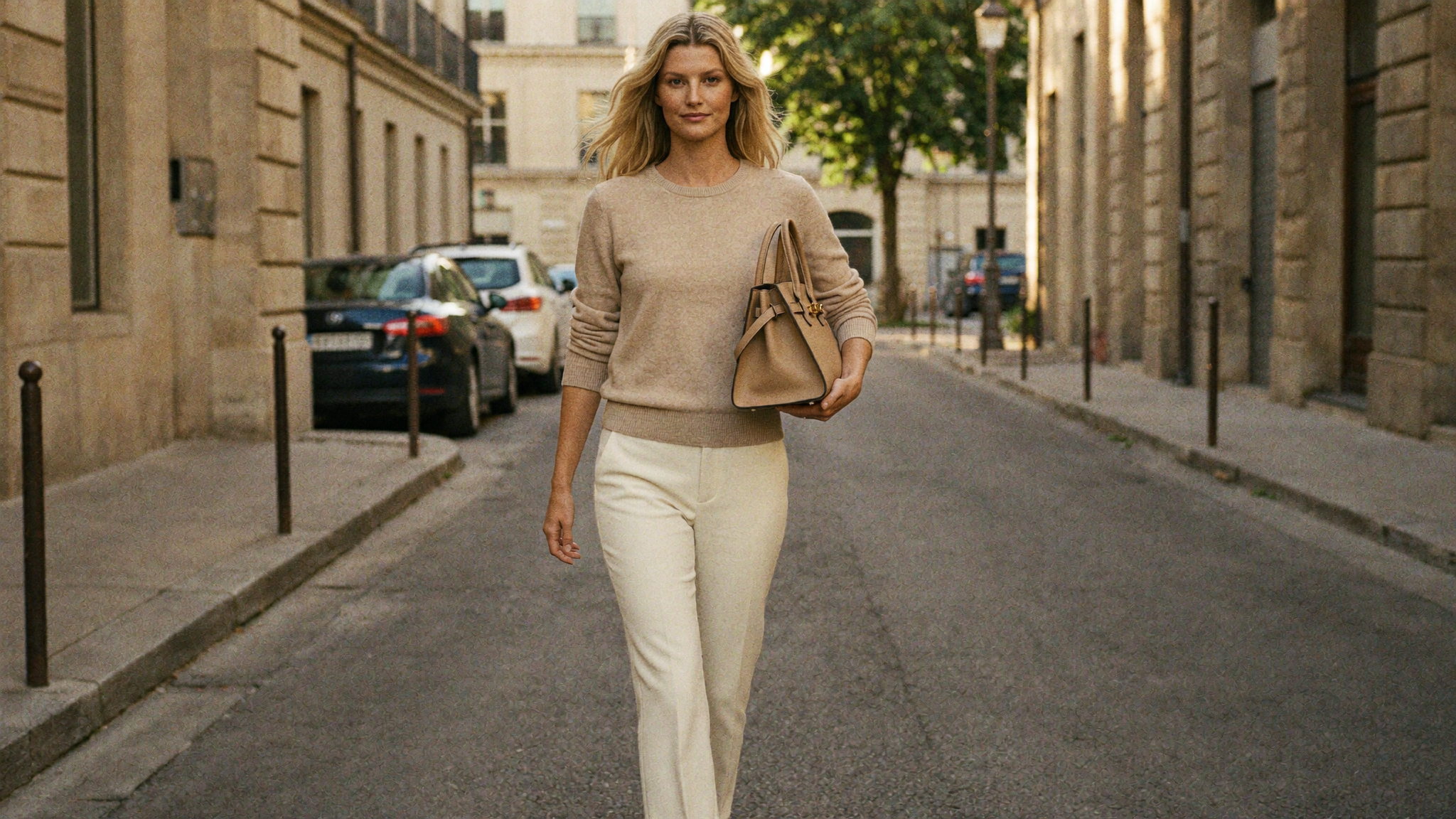
Nothing telegraphs "considered" faster than a tight colour story. Build around cream, camel, ecru, navy, and soft white, and let those five neutrals carry the whole wardrobe. When everything lives in the same family, cheaper pieces borrow polish from the expensive ones beside them, and the eye reads the outfit as one intentional whole.
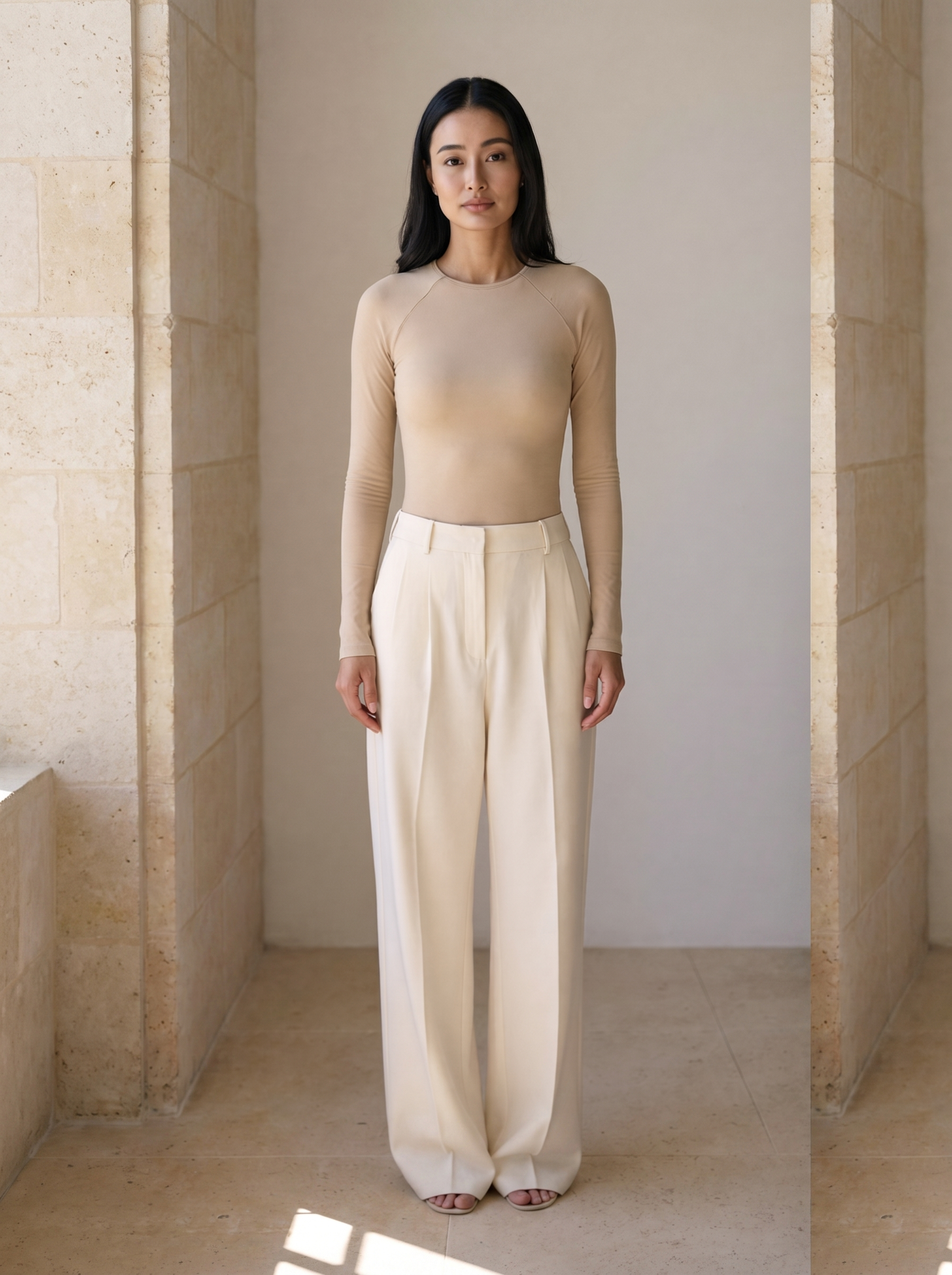
Start with a foundation that never argues with itself. A tonal knit and a pair of clean trousers like the Romy Trousers give you a base that looks quietly expensive before you have added anything at all.
Expensive is a feeling, not a price. It comes from fit, fabric, and the confidence to leave the logo off.
Rule two: fit is the whole game
The single fastest way to look like you spent more is to make what you own fit properly. A twenty-euro shirt that sits clean at the shoulder outperforms a designer one that gapes. Find a tailor, take in the waist, shorten the hem, and suddenly the same clothes photograph like they cost triple.
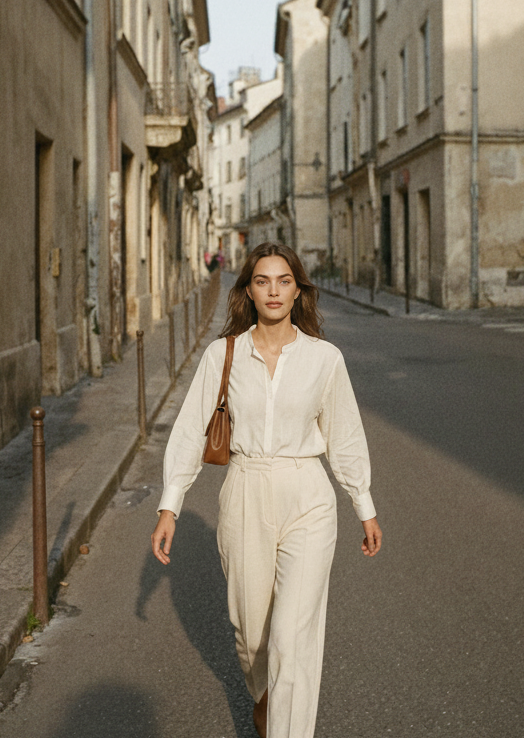
Pay attention to three points: the shoulder seam should meet the edge of your shoulder, trousers should break just once at the shoe, and sleeves should end at the wrist bone. Get those right and the fabric does the rest. A relaxed piece like the Parisia Top reads as intentional the moment it hangs correctly.

Rule three: buy texture, not embellishment
Cheap looks cheap when it is shiny, stiff, or covered in hardware. Expensive looks expensive when it has depth you can almost feel through a screen. Reach for matte, natural, and soft: linen, cotton, ribbed knit, a little drape. A ruffle in a fluid fabric like the Beige Ruffle Blouse reads as detail rather than decoration.
Skip anything with visible branding, plasticky sheen, or trend-of-the-month cut. Those are the tells that date an outfit and cheapen it. Texture ages well; embellishment rarely does.
Rule four: one good bag beats three trendy ones
Accessories are where the old money aesthetic is won or lost. One structured bag in a neutral, carried until it wears in, says more than a rotation of it-bags. The Bourgeois Handbag is the kind of quiet, shape-holding piece that anchors an outfit and never dates.
Same logic with jewellery. A single pair of clean gold earrings, worn daily, outclasses a drawer of costume pieces. Choose one, like the Romy Earrings, and let it become a signature rather than a rotation.
The wealthiest-looking closets are the smallest. Fewer things, better chosen, worn until they feel like yours.
Rule five: grooming is half the outfit
The old money aesthetic is never only about clothes, and this is the part most budget guides miss. Clean hair, tidy nails, a pressed collar, and shoes that are not scuffed will make a modest outfit read as expensive faster than any single purchase. A crease down the front of the trousers, a lint-rolled knit, a bag wiped clean: these cost minutes, not money, and they are exactly the details that separate looking cheap from looking considered.
Care is the quiet signal here. Clothes that are washed correctly, stored on real hangers, and mended when they need it hold their shape and colour far longer than their price suggests. Looking expensive on a budget is as much about maintenance as it is about the buy.
Where to actually spend, and where to save
Not every piece deserves the same slice of your budget. Put your money into the items worn closest to the face and most often: a knit, a shirt, the one bag you carry daily. These are the pieces people register first, and quality there pays back every time you wear them. A well-made top in a natural fabric quietly lifts everything paired with it.
Save on the pieces that do quieter work. Trousers in a clean cut, a simple summer top, seasonal items you will rotate out, none of these need to be the most expensive thing you own to look right. Spend where it shows, save where it does not, and the whole wardrobe reads as considered without draining the account. That balance is the real budget version of the old money aesthetic.
What to skip entirely
Just as useful as knowing what to buy is knowing what to leave on the rail. Skip anything with a large visible logo, novelty hardware, or a slogan. Skip fabrics that shine under light, since sheen is the fastest tell of a low price point. Skip the micro-trend that will look dated by next summer, and skip fast rotations of it-bags in favour of one you will actually keep.
The old money aesthetic is built on subtraction. Every time you resist a loud, trend-driven purchase, you protect the calm of the palette you have already built, and you keep the wardrobe reading as intentional rather than accumulated.
Putting it together on a budget
Start with the base: neutral trousers, a well-fitting top, one knit. Add a single structured bag and one pair of gold earrings. Take everything to a tailor for the small fixes, and keep the whole thing pressed and clean. That is the entire formula, and none of it depends on a designer receipt. Build slowly, buy strictly in the palette, and the wardrobe compounds into something that quietly reads as expensive every time you get dressed. The look was never about how much you spent. It was about how much you left out.
Shop the edit
- Romy Trousers
- Parisia Top
- Beige Ruffle Blouse
- Bourgeois Handbag
- Romy Earrings
- See the full Summer Edit
Build your own quiet luxury wardrobe from The Summer Edit, one considered piece at a time.